Sunday, December 5, 2010

What's Up? - The Big Bang

Welcome back to What's Up?

One of the biggest questions in science is where did everything come from? It's not an easy question to answer and it may not even be fully answerable with current scientific knowledge.

A timeline of the history of the universe, from the Big Bang to now. Click to enlarge.

What we do know, is that the universe started with the Big Bang. The Big Bang was the rapid expansion of the universe in an event a lot like a massive explosion. How the Big Bang got started is still up for debate.

The theory got its start when Edwin Hubble discovered that there were other galaxies outside our own and that the universe was expanding. Since the universe is expanding, it means that at some point the universe must have been much, much smaller than its current size.

At the very beginning, when the universe was still very small, it was extremely hot and dense. It was essentially a hot "soup" of particles, so hot that atoms would not be able to hold together. There isn't a lot of observational evidence for these early moments, but the theory thoroughly explains what happens shortly after. 

Before we burn our tongues trying to test this particle soup, let's move on to some more testable events.

A small fraction of a second after the Big Bang, some particles began to group together to form larger particles. Quarks, an abundant ingredient in the particle soup, then grouped together to form neutrons and protons, the building blocks of atoms.

Between three and twenty minutes later, neutrons and protons combined together to form the nuclei, or centers, of atoms. The exact amount of Hydrogen and Helium predicted to have formed by the Big Bang Theory matches up exactly with what is measured by astronomers.

But it's not until 379,000 years after the Big Bang that electrons finally begin to orbit the nuclei, to form the first true atoms. The temperature was now a cozy 3000°C. After this moment, light particles, known as photons, are finally able to freely move without instantly colliding with something. 

An interesting thing about light particles is that they have a specific wavelength, or energy, depending on the temperature of the substance they were emitted from. A hot burner glows red because of the energy of light emitted by that temperature.

An image of the cosmic microwave
background taken by the WMAP
mission. Click to enlarge.
Due to the expansion of the universe and the time these photons have been traveling through space, their wavelengths have been stretched out, resulting in a much lower energy. The temperature of the photons should now be approximately -270°C, 3°C above absolute zero, the coldest possible temperature. These photons are now referred to as the cosmic microwave background.

American radio astronomers Arno Penzias and Robert Wilson discovered the cosmic microwave background in 1964 at nearly the exact predicted energies.

Millions of years after the Big Bang, stars began to form and galaxies also began to clump together. The James Webb space telescope will check for these early stars once it is launched in 2015.

The Hubble deep field, an image
of the early universe taken by
the Hubble Space Telescope.
The ages of the oldest current stars and how fast the universe is expanding both agree on the age of the universe. The Big Bang Theory has held up to all tests so far and refinements to measurements are being made all the time. This is an exiting and truly bizarre universe that we live in.

Maybe someday we will know how it all started, but until then, let's see what's up in this month's sky.

The new Moon is on Dec. 5, which will become a full Moon by Dec. 21. On Dec. 21, there will be a total lunar eclipse after midnight, where the Moon will slowly change to a very dark red.

Also on Dec. 21 is the winter solstice, considered to be the first day of winter.

On the night of Dec. 13 and the morning of Dec. 14 is the Quadrantid meteor shower. This shower may very well be the best meteor shower of the year with up to 120 meteors per hour predicted. No one likes a cold shower in the winter; so make sure to dress warmly.

Jupiter will be in the southern sky, dominating the evening sky throughout the month. In the morning sky, Venus will be shining brilliantly bright, low the southeast. Saturn will be a little to the west of Venus, accompanying it throughout the month.

Mercury will try to make a showing at the very end of the month, but will be very hard to pick out low in the east right before sunrise.

The Athena Community Astronomy Club will be having their annual Christmas meeting on Dec. 12 at the Wilmot Community Centre from 7pm to 9pm. Friends, family, and newcomers are always welcome.

Until next month, just look up!


Hey Kids...

Did you know that you can see leftover radiation from the beginning of the universe? If you have an old TV kicking around with the "bunny ears" on top and set it to one of the fuzzy channels, a small amount of that fuzzy image, about 1%, is from the Big Bang. The Big Bang was the explosion that is believed to have been the start of the universe. It doesn't take fancy equipment to do science, just a little interest and some imagination.

Sunday, November 7, 2010

What's Up? - The Immensity of the Universe


Welcome back to What's Up?

When looking up at the night sky, the vastness of the universe can be completely mind-blowing. Over the centuries our view of the universe and the scale of the universe has changed dramatically.


A comparison of the difference in sizes between planets and various stars.

For millennia it was believed that the Sun, Moon, and five planets orbited the Earth. The stars were believed to be holes in a large dark sphere surrounding our solar system.

That model had many problems fitting the motion of the planets in the night sky and finally, in the 16th century, Nicolaus Copernicus finally presented a Sun-centred solar system. This theory, called heliocentrism, features the planets of the solar system all orbiting the Sun in perfect circles.

In the early 17th century, Johannes Kepler published what are now known as Kepler's laws. With these laws it was shown that the planets orbit in elliptical (egg-shaped) orbits and not perfectly circular orbits as was believed at the time.

In the 1800's, the distances to the nearest stars were measured and discovered to be quite large. The nearest star, Proxima Centauri, is 4.2 light years away. In other words, since a light year is the distance that light travels in a year, this star is 40 trillion kilometres away! It would take tens of thousands of years travelling in a relatively fast spaceship to reach this star.

In our galaxy, the Milky Way, there are around 100 billion stars in a large pan-cake shaped disk 100,000 light years wide. Our Sun is a tiny yellow-dwarf star in the suburbs of this galaxy, two thirds of the way out from the centre.

In 1925, Edwin Hubble announced that he had discovered that certain nebulae were not actually nebulae, but galaxies just like our Milky Way. Shortly after, he also discovered that the universe is expanding.

The Andromeda galaxy, the nearest large galaxy like our own, is 2.2 million light years away and yet this is only a stone's throw compared to the most distant known galaxies.

The most distant galaxy known is over 13 billion light years away. This galaxy was, interestingly enough, discovered by the Hubble Space Telescope, which is named after Edwin Hubble.

This galaxy appears as it did "only" a few hundred million years after the big bang (the beginning of the universe). This galaxy was barely formed and its first generation of stars were dying off.

We have just reached the current visible limit of our universe. But this doesn't mean that it is the edge of the universe. The universe may be much larger. The edge of the observable universe only comes about because light takes time to reach us from distant galaxies.

Many galaxies are just too far away for light to have reached us yet. In fact, we'll never see the light from the more distant galaxies because the universe is expanding too quickly.

Some astronomers believe that we can see only four percent of the universe, while others think that there may be an infinite number of universes like ours popping into existence.

These mind-stretching theories and ideas are at the edge of what is known about this bizarre universe we find ourselves living in. Although the grand distances involved are impossible to visualize, it's easy to appreciate the astonishing scale of universe and the beauty within.


A National Geographic poster that may help to visualize the size of the universe.
The true size of the universe will take many years to figure out. Until then, let's see what's up in this month's night sky.

There will be a new moon on Nov. 6 which will swell to a full moon by Nov. 21.

The Leonid meteor shower will peak on Nov. 17, so make sure to keep an eye out and you may spot a few Leonid meteors streaking across the sky.

Jupiter will be the brightest star-like object in the sky shining somewhat low in the southern sky throughout the month.

The Athena Community Astronomy Club will have its monthly meeting on Nov. 21 at the Wilmot Community Centre. The meeting runs from 7pm to 9pm and guests are always welcome.

Until next month, just look up!


Hey Kids...
What do you see when you look at the moon? It's a bit like looking at the clouds and picking out shapes. Although there is no Man in the Moon, our brains are very good at picking out shapes. The brain is so good, that sometimes, when a shape doesn't match what we know, our brain chooses something and uses that shape. A lot of people see the "Man in the Moon", but everyone sees something different. Some see a woman singing, a rabbit, or even a man carrying sticks next to a dog. A little imagination can go a long way.

Saturday, October 2, 2010

What's Up? UFOs = Alien Spacecraft and Abductions?

Welcome back to What's Up?

When looking up at night, one of the first questions that may come to mind is "Are we alone?" Since the ancient Greeks, people have asked that very same question. Although most astronomers today would say there is life on other worlds, there is no definite evidence pointing toward a simple yes or no.
A typical image of an Unidentified Flying Object claimed to be an alien spacecraft.
The Search for ExtraTerrestrial Intelligence (SETI) involves searching through radio telescope observations for signals from distant aliens. While sometimes associated with pseudoscience, SETI doesn't jump to conclusions without solid proof of a signal.

There is a wide-spread belief that intelligent life has been visiting the Earth on a regular basis. This belief is almost non-existent among professional astronomers for many reasons. "Extraordinary claims require extraordinary evidence," as Carl Sagan, who pioneered the field of astrobiology, once said while discussing the possibility of alien visitation.

UFO, which stands for Unidentified Flying Object, has become synonymous with alien spacecraft in recent decades. The vast majority of UFO sightings can be explained fairly easily.

For example, Venus low in a turbulent evening sky can appear to flash and change colour very rapidly and is a very common explanation for a lot of UFO phenomena.

The Moon has been mistaken for a UFO many times. When low on the horizon it appears as a very deep red and if clouds block out certain parts, it can appear to be some very strange shapes. When a crescent Moon is setting it can look like a burning sailboat sailing away from you.

An image I took of the Moon low
on the horizon.
During the day, clouds and reflections of the Sun off of clouds can look very odd. Sun dogs, which are bright spots in the sky can appear orb-like or as large arcs, near and around the Sun.

There are many other natural explanations for weird phenomena in the sky, but what about the flying saucers?

As it turns out, lenticular clouds, can be quite disk-like, although they usually only form near mountains. Other sources of flying saucers in photographs (especially the blurry ones) are dirt or water drops on the camera lens, a fast moving object being blurred in the frame, or are photoshopped.

Sightings by spacecraft of objects entering the atmosphere and shooting back off into space have been reported. Something that can do that must be aliens, right?

Well, not quite. As it turns out, if a meteor comes in at a shallow angle it can bounce off the atmosphere just like a when you skip stones at the beach.

Shortly after the release of the X-Files, UFO sightings spiked. Whether or not that is because of imagination or more people looking up at the sky can't really be said.

Speaking of the X-Files, there are also "alien abductions." At first glance it can seem very unlikely that so many different people could have such experiences if abductions weren't really happening. But, upon closer inspection, these abductions can be explained by how the human brain works.

The human brain is not a perfect machine for interpreting reality and abduction stories can be explained by hallucinations, near-sleep states, temporary schizophrenia, epileptic seizures, and even false memories. What people experience largely depends on the culture they are brought up in.
Are the rows of equal thickness?
An example of one of the many
ways our mind can trick us.

Have aliens visited Earth recently? They most likely have not. The majority of presented evidence is anomaly hunting, which is looking for anything odd and then jumping to the conclusion that it must be aliens. It can't be said for certain that there isn't alien visitation, but until solid proof is available, we won't have to rename our laws concerning illegal aliens.

While we're still thinking about what may be lurking above, let's see what's up in this month's skies.

The new Moon will be on Oct. 7 while the full Moon will be on Oct. 23.

Jupiter will shine brightly throughout the month in the southwest shortly after sunset.

The Athena Community Astronomy Club will have its monthly meeting on Sunday, October 24. The meeting runs from 7pm to 9pm at the Wilmot Community Centre. Guests are always welcome.

Until next month, just look up!


Hey Kids...
Did you know that Mercury, that toasty planet closest to the Sun, has a tail? It's not much of a tail, but it's definitely there. Most of the tail is from sodium, what you may know as salt, getting blown off Mercury by the solar wind. It turns out that there is a little mystery as to what else it is made of. This just proves that you can discover something hiding in plain sight. All you have to do is ask lots of questions and be on the lookout for anything new and exciting.

Saturday, September 4, 2010

What's Up? A Slew of Exoplanet Discoveries

Welcome back to What's Up?

As NASA's Kepler spacecraft continues to look for tell-tale clues of planets circling distant stars, reports of confirmed planet discoveries are slowly trickling in. Just in the last month, NASA announced that Kepler had discovered its first multiple planet system.

Kepler finds planets by detecting a dip in brightness as the planet passes in front of its star.
In this first multiple planet system, there are two planets orbiting the same star with a third unconfirmed planet called a “super-Earth.” This super-Earth is not likely to be very Earth-like, being a few times the mass of the Earth and orbits around its star in barely more than 38 hours!

Kepler is NASA's main instrument for discovering planets around other stars. It will stare at the same star field in the constellation Cygnus, the swan, for at least three and a half years. Out of the millions of stars in its field of view, Kepler will continuously monitor 100,000 of them.

Where Kepler will watch for
exoplanets. Click to enlarge.
The spacecraft is named after Johannes Kepler, who is best known for figuring out that the planets in our solar system have ellipse shaped (egg shaped) orbits around the Sun.

Scientists working with Kepler are very cautious about announcing new discoveries and always double or triple check everything. Right now there are over 700 possible planets from just a few months of data collection. Even if half of these are planets, it will nearly double the number of currently known extrasolar planets.

Among these candidates are many smaller planets and possible Earth sized planets. Although there may be many small Earth-sized worlds, the data needs to be checked by other telescopes for false alarms.

A completely separate team of astronomers working with the European Southern Observatory have discovered the richest exoplanet system known. Circling around the creatively named star, HD 10180, are at least five Neptune sized worlds.

This busy planetary system was discovered by carefully watching the starlight for blue shifting or red shifting, caused by the star being tugged towards and away from us by an unseen planet orbiting the star.

The astronomers also reported that there are two “fuzzier” signals present. The lead researcher, Dr. Christophe Lovis says he is “99%” certain that these two other planets are indeed there.

One of these uncertain exoplanets appears to be only 1.4 Earth masses. If confirmed, it will be the least massive exoplanet yet discovered.

Technology for detecting planets around other stars is still in its infancy, and yet there are over 400 currently known exoplanets and now there is a single star with as many as seven planets orbiting it!
An artists depiction of a planet around another star.
Future missions, like the James Webb Space Telescope, will have the ability to directly image some of these planets. By looking the colours reflected by the planet, astronomers will be able to figure out the composition of these planets' atmospheres.

Until then, let's see what's up in this month's sky.

The new Moon will be on Sept. 8 this month and will swell to become a full Moon on Sept. 23.

Jupiter will be at opposition (closest point to Earth) on Sept. 21. This is the best time to view the king of the planets. It will be the brightest star-like object rising in the east just after sunset.

Venus will be low near the western horizon and is the brightest object in the night sky (other than the Moon), while Mars will appear as a reddish star off to the side.

Autumnal Equinox, also known as the first day of Autumn, is on Sept. 23.

The monthly meeting of the Athena Community Astronomy Club will be on Sept. 26, the last Sunday of the month. The meeting starts at 7pm and ends at 9pm. Guests are always welcome.

Until next month, just look up!

Hey Kids...
Did you know that you can help choose the space shuttle's wake-up music? If you go on the internet and go to "songcontest.nasa.gov", you can vote on which song you would like the astronauts to wake up to on the next Space Shuttle mission. If you feel really creative, you could even write your own song, and possibly have the astronauts on the last Space Shuttle mission listen to it. Imagine being a music star almost literally among the stars.

Sunday, August 8, 2010

What's Up? The Einstein Revolution

Welcome back to What's Up?

When we look up at night we see the stars and planets above, rotating hour by hour and night by night, just like clockwork. It's easy to appreciate the night sky's beauty, but sometimes we forget those who have helped figure out how the universe ticks.

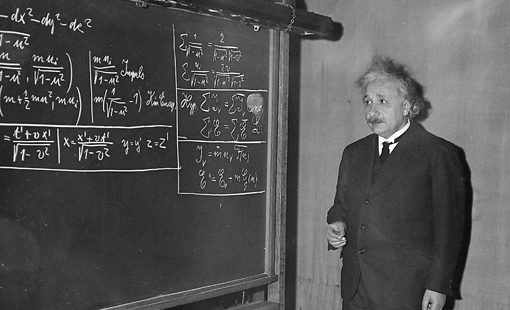
The most well known of those great thinkers is most likely Albert Einstein. Although best known for his equation, e = mc2, which led to the development of the atomic bomb, his work has greatly helped in the understanding of the mysterious and quirky universe we live in.
Albert Einstein showing off a few equations.

Before Einstein, Mercury's odd shifting orbit could not be explained. Einstein's Special Theory of Relativity explained Mercury's orbit and got rid of the need for "fudge factors" in the equations or a hidden planet near the sun.

Einstein applied his equations to the entire universe and found that any mass in the universe would have enough gravity to eventually cause the universe to collapse in on its self. Since most astronomers at the time thought the universe was unchanging, he added a "cosmological constant" that would push back against gravity to prevent the universe from collapsing.

Just over a decade after adding the cosmological constant, it was discovered that the universe was expanding and there was no need for a cosmological constant to keep it from collapsing. Einstein called this the biggest blunder of his career.

Ironically, in 1996, researchers discovered that the rate at which the universe is expanding is getting faster and faster, it is accelerating! There is now a need for something similar to a cosmological constant to account for the accelerating expansion. The force driving the acceleration is referred to as dark energy, and is one of the biggest areas of research in astronomy today.

Einstein also realized that light is composed of individual particles and that light can be affected by gravity.
Photons being bent around the Sun.

Four years after Einstein's General Theory of Relativity in 1915, astronomers observed stars near the Sun during a solar eclipse. With the Moon blocking the Sun, it was easy to see where nearby stars were. Some of these stars appeared to out of place.

The light from the stars had been bent by the gravity of the Sun! This observation confirmed General Relativity and made Einstein an instant scientific celebrity.

From the same theory he also predicted that if something travels near the speed of light, the object will shrink in length, become more massive, and time will slow down for that object. Being in a gravitational field can also cause time to slow down. These observations may seem extremely crazy, but they have been proven to be true.

Communications satellites need to have Einstein's equations programmed into them. They orbit hundreds of kilometers above us and they don't feel as much gravity as we do, down here on the surface of the Earth. Since we experience more gravity, our clocks run a bit slower than the satellites' clocks. 

Without Einstein's equations, the difference between our clocks and the satellites' clocks would add up. A simple GPS system would start to drift within minutes without his equations. 

The next time you pick up your cell phone or turn on your GPS system in your car, remember that Einstein's equations are running inside the device.

Although quite comprehensive, Einstein's theories of Special and General Relativity can't explain the beginning of the universe, how gravity works on small scales, or what it is like inside a black hole.

Until those mysteries are solved, let's see what's up in this month's sky.

The new Moon will be on August 10, which allows for a perfect sky on August 12, the best night for watching the Perseid meteor shower. Rates can get up to around 100 per hour but the usual rate is around 60 per hour, or one every minute. 

To watch the meteor shower, find something to lie on, dress very warm, and look up sometime after sunset. The shower should get better as the night progresses.

The full Moon will be on August 24, and will be the smallest full Moon of the year.

The Athena Community Astronomy Club will have its monthly meeting at the Wilmot Community Centre from 7pm to 9pm on Sunday, August 29. Guests are always welcome.

The club will be continue its weekly boardwalk viewing sessions every clear Wednesday this month along the Summerside baywalk, by the Shipyard Market building, shortly after sunset.

Until next month, just look up!


Hey Kids...
If you have ever asked anyone whether airplanes can fly in space, you likely were told that they can't because there is no air in space. They are only partly right. There is a new plane called VSS Enterprise which is actually two planes joined together with a rocket underneath them. It's not going to be cheap at first but maybe someday you'll take a ride in this futuristic space plane.
VSS Enterprise in flight.

Sunday, July 4, 2010

Other Worlds Right Here on Earth

Welcome back to What's Up?

Although it may often seem that the Earth is completely unique in the Solar System, this is often not the case. There are many locations on Earth where the conditions are almost identical to other worlds in the Solar System. These locations are called Earth-based analogs.

One of these locations can even be found in Canada.

The Haughton-Mars base on Devon Island, Canada.

Devin Island, the world's largest uninhabited island, is in the chilly Canadian arctic and has temperatures which can drop as low as -50°C. Haughton crater, on Devin Island, is considered one of the best Mars analog sites.

It is so similar to Mars because it is very isolated, has similar temperature ranges, receives very little precipitation, and for the most part, lacks any life larger than a microbe.

Since 1997, Haughton crater has been the location of the Haughton Mars Project. The project has featured many experiments on the types of life that can live there, what the geology is like, and remotely controlled greenhouses have been built as a test for future Mars missions.

The location is even being used for testing prototype Mars and Moon rovers for future missions.

Speaking of Moon missions, the Apollo astronauts trained for the first Moon missions using an Earth-based analog.

Mauna Kea has a very similar
landscape to that of the Moon.
In the 1960's, just before the historic moon landings, the astronauts trained in the volcanic ash deposits on top of Mauna Kea, Hawaii. The dusty terrain was perfect for testing out the lunar rovers and other gear needed for a lunar landing.

Moving on from the Moon-like landscapes, we can find very dry Mars-like conditions on Earth.

In the middle of the Atacama desert are the driest conditions known on Earth. It has barely rained at all for the last 10 million years and in the driest areas there are no signs of life, not even a microbe.

On Mars, the majority of the surface is as dry or drier than the Atacama, but some areas experience small snowfalls and frost which could provide water for the toughest microbes that may be living in the soil or rocks.

Deep under the surface of the Atacama's parched terrain lies groundwater where life can easily flourish. It is hoped that groundwater exists on Mars underneath the vast expanses of desert.

While we're thinking water, let's dive to the deepest areas of the ocean. The water pressure is immense and the water is very dark and cold. What kind of worlds would have this much water?

Europa has more liquid water than
any other world in the solar system.
Two of the most promising places to find deep oceans are Jupiter's moon Europa and Saturn's moon Enceladus. These are both ice covered moons with hidden oceans comparable to the Earth's.

It is quite possible that hydrothermal vents, also known as black smokers, might spew minerals and hot water that could support many diverse forms of life just like they do here on Earth.

Europa has large cracks in its smooth, icy surface, that are coloured suggesting the presence of bacteria making a living on or in the ice where it meets with the ocean beneath.

Before we slip into the deep ocean waters of the solar system's icy moons, let's see what's up this month.

The new Moon will be on July 11th while the full Moon will be on July 26th. Observers in South America and Easter Island will be treated to a full solar eclipse on July 11th.

Venus will be shining brightly, low in the west after sunset, with Mars and Saturn nearby. Mars will be a much dimmer red and Saturn will be yellow.

Jupiter will make its appearance a few hours later, rising in the East.

The Athena Community Astronomy Club will have its monthly meeting on July 25th, the last Sunday of the month. The meeting goes from 7pm to 9pm at the Athena Community Centre. Guests are always welcome.

The club will continue its weekly Summerside baywalk viewing sessions, next to the Fisherman's Market building every clear Wednesday around sunset.

Until next month, just look up!


Hey Kids...If you look up at the stars every clear night, they seem to stay still relative to each other, but they actually are constantly moving. Since the stars are so far away, they appear to move extremely slowly, just like when you're in a car and the distant surroundings move by very slowly. The fastest moving star in the sky is Barnard's star. This star is moving 140 kilometres every second relative to the sun! It's amazing what you can discover when you look at everyday things just a little bit closer.

Sunday, June 6, 2010

Defending the Earth

Welcome back to What's Up?

In the news this past month, David Attenborough, a British biologist, claimed that the Earth is undergoing one of the fastest rates of extinction in our planet's entire history. Species around the world are dying off due to climate change, pollution, and habitat loss.

These problems are largely human created problems, but they can be solved. 

If there are so many urgent problems on Earth, why spend money on space exploration?

There is a long list of good reasons to explore space and protecting Earth is one of them. After all, the Earth is part of the universe and is very vulnerable.

Lurking in the solar system are rocky objects called asteroids and icy/rocky objects called comets. There are a lot of these objects and some have very strange orbits that can can put them on a collision course with Earth.

A brilliantmeteor as it "burns" up in
the upper atmosphere.
Some of these asteroids are only specks of dust or the size of pebbles, while others are the size of cities. Every day 10,000 tonnes of asteroids, most smaller than a golf ball, fall to Earth. When they enter the atmosphere they are now called meteors or "shooting stars" as they burn up on their way down.

When Earth passes through a large stream of these dust or pebble sized objects, a meteor shower occurs. Instead of grabbing an umbrella during one of these showers, grab a warm sweater, something dry to lay on, look up, and enjoy the show.

When really large asteroids come in they may make it to the ground. Others heat up and explode in the sky.
Site of the explosion in Siberia
shortly after (above) and one
hundred years later (above).

In 1954, Ann Hodges of Sylacauga, Alabama became the first person known to have been hit by a meteorite. While taking a nap, a 4 kilogram (9 pound) meteorite smashed through her roof, bounced off her radio, and landed on her hip. 

In 1908 a relatively small asteroid or comet, about 50 meters (150 feet) in diameter, exploded in the sky above Siberia. The explosion was 1000 times more powerful than the atomic bomb dropped on Hiroshima. Around 2,000 square kilometers of trees were levelled in all directions, an area larger than Washington, D.C.

While objects like the one that exploded over Siberia only happen every few hundred years, they are extremely dangerous. In the past even larger objects have impacted Earth.

What the dino killer may
have looked like.
One day, 65 million years ago, the dinosaurs were wiped out by an asteroid the size of Mount Everest. This kind of event is so rare that it has only happened a few times since life arose on our planet.

While it may seem impossible to prevent these impacts, scientists and groups like the Planetary Society, are working on ways to steer such asteroids away from Earth's path.

Some ideas include using a nuclear bomb to push an asteroid slightly off-course, attaching a rocket and slowly pushing the asteroid, or even using the gravity from a satellite to slowly tug on an asteroid over many years. While all require advance warning, they can keep these dangerous objects away.

The only way to get advance warning is to keep an eye on the skies.

While we're watching the skies let's see what's up this month.

There will be a new moon on June 12 and a full moon on June 26.

The longest day of the year, the Summer Solstice, otherwise known as the first day of Summer, will be on June 21 this year.

Venus, Mars, and Saturn will be visible low in the west or southwest throughout the month. Venus will be the brightest, very low in the sky. Mars will be slightly higher and will appear as a red-orange "star." Saturn will be a little higher still and to the west a bit. It will be a dim yellow.

The Athena Community Astronomy Club will have its monthly meeting on the last Sunday of the month, June 27. The meeting is at the Wilmot Community Centre and runs from 7pm to 9pm. Guests are always welcome.

The club will also be having viewing sessions, every clear Wednesday evening, along the baywalk by the Shipyard Market building at dusk.

Until next month, just look up!


Hey Kids...
The United States launched a super-secret mini space shuttle last month. Nobody knows how long it will stay in space or even what it is doing up there. But now, a few backyard star gazers have found it and are tracking it. So much for being super-secret. With regular backyard telescopes, some people are even taking pictures of it. It is sometimes bright enough to be seen drifting across the sky as a faint dot in the night sky. You never know what you may see if you just look up!